Mission Trails
About:
Rock Climbing at Mission Trails Regional Park
Mission Trails Regional Park—known to climbers as Mission Gorge—is San Diego’s backyard climbing destination and one of the most important crags for the local climbing community. Climbing here dates to the 1950s, and roughly 200 routes have since been established across the area. Many are well suited to beginner and intermediate climbers, with most routes measuring about 50 to 65 feet and a handful reaching approximately 100 feet.
For generations of San Diego climbers, Mission Gorge has served as an accessible place to build experience, meet climbing partners, and develop a connection to the region’s outdoor climbing history. The crag also offers an exceptional setting for learning and practicing outdoor rock-climbing techniques, including movement on natural rock, belaying, rappelling, anchor systems, lead climbing, and traditional gear placements.
A convenient San Diego Crag
What sets Mission Gorge apart is its accessibility. While many of San Diego County’s climbing areas—such as El Cajon Mountain and Corte Madera—require long, steep, and strenuous approaches, Mission Gorge is close to much of the city and its beaches. For many San Diego residents, the drive is about 25 minutes, and a short approach trail reaches the first climbing areas in roughly 15 minutes. This combination of proximity and a quick approach makes it possible to enjoy outdoor climbing without committing to a full day in the backcountry.
Mission Gorge’s west-southwest-facing aspect is unusual compared to many other climbing areas in San Diego. This gives many routes valuable morning shade, often until approximately 11:00 a.m. to 1:00 p.m., depending on the wall and season. Many other local crags face south or southeast, where direct morning and midday sun can make the rock uncomfortably hot in Southern California’s warm, dry climate. Even at Mission Gorge, an early start is especially important during July, August, and September, when temperatures can exceed 100°F.
Climbing Style and Equipment
Mission Gorge offers a mix of fully bolted, partially bolted, and traditionally protected routes. To experience the full variety of climbing, consider bringing a single traditional rack. A double rack can be helpful for the well-known Mission Gorge Traverse. Equipment needs and route conditions can change, so confirm current information before climbing.
Classic Routes
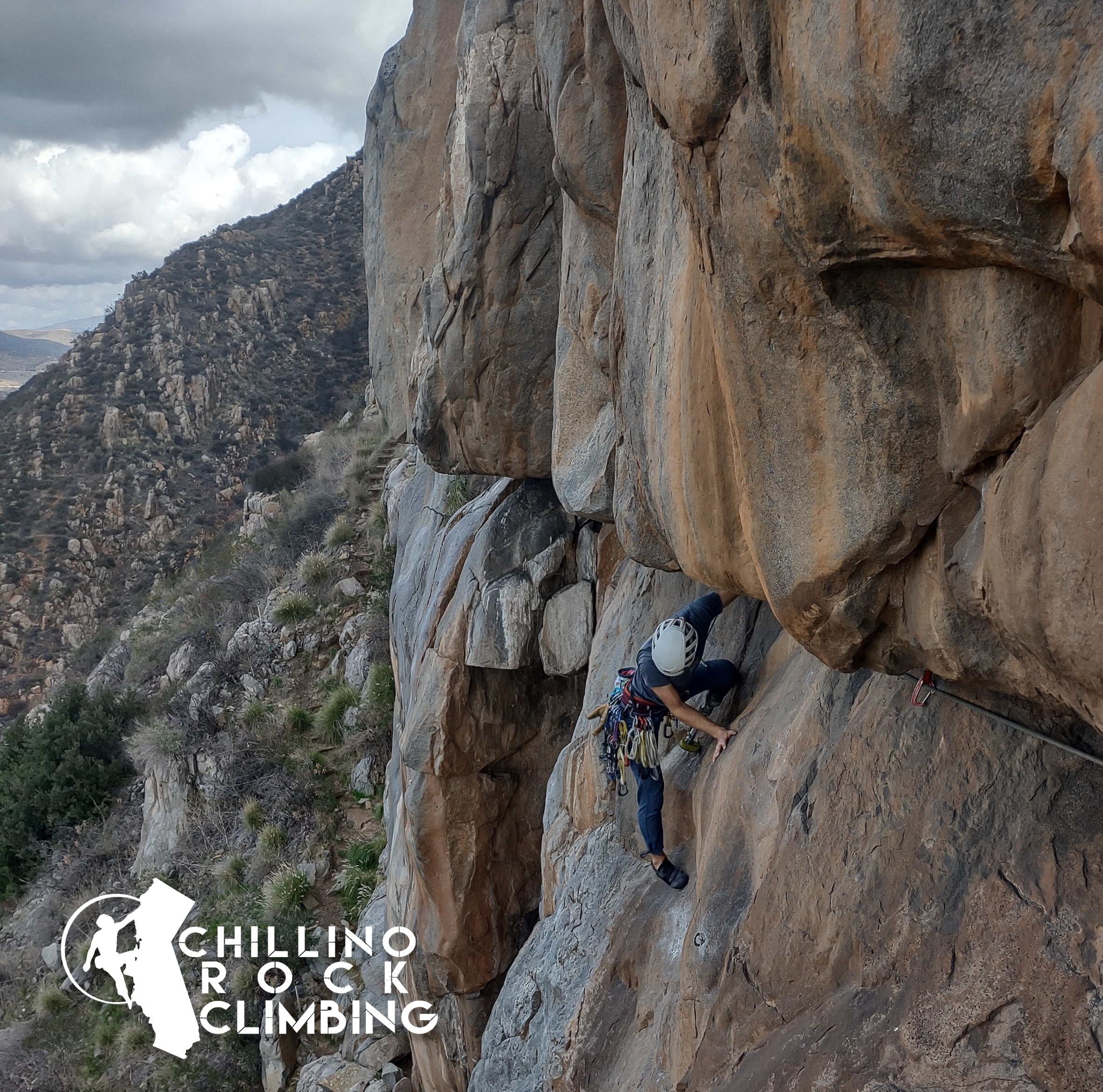
Mission Gorge Traverse (5.8) — A long, end-to-end traverse with excellent exposure. A double traditional rack is helpful.
Mission Control (5.8) — A fully bolted face climb with a two-bolt anchor.
The Tower (5.7) — A fully bolted face climb with a two-bolt anchor; medium-size gear may be useful for the first placement.
The Ramp (5.7) — An aesthetic traditional line protected with small- to medium-size gear and finished by a two-bolt anchor.
Suzie’s Wild Ride (5.8+) — An excellent, meandering face climb equipped with bolts and a two-bolt anchor.
Escapade (5.11a) — A striking bolted line that combines steep climbing with slab sections.
Planning Your Visit
Consult Mountain Project for additional route information and current reports. Chris Hubbard’s free Mission Gorge PDF topo is another useful planning resource: view the topo resource. Or simply contact us for more information.